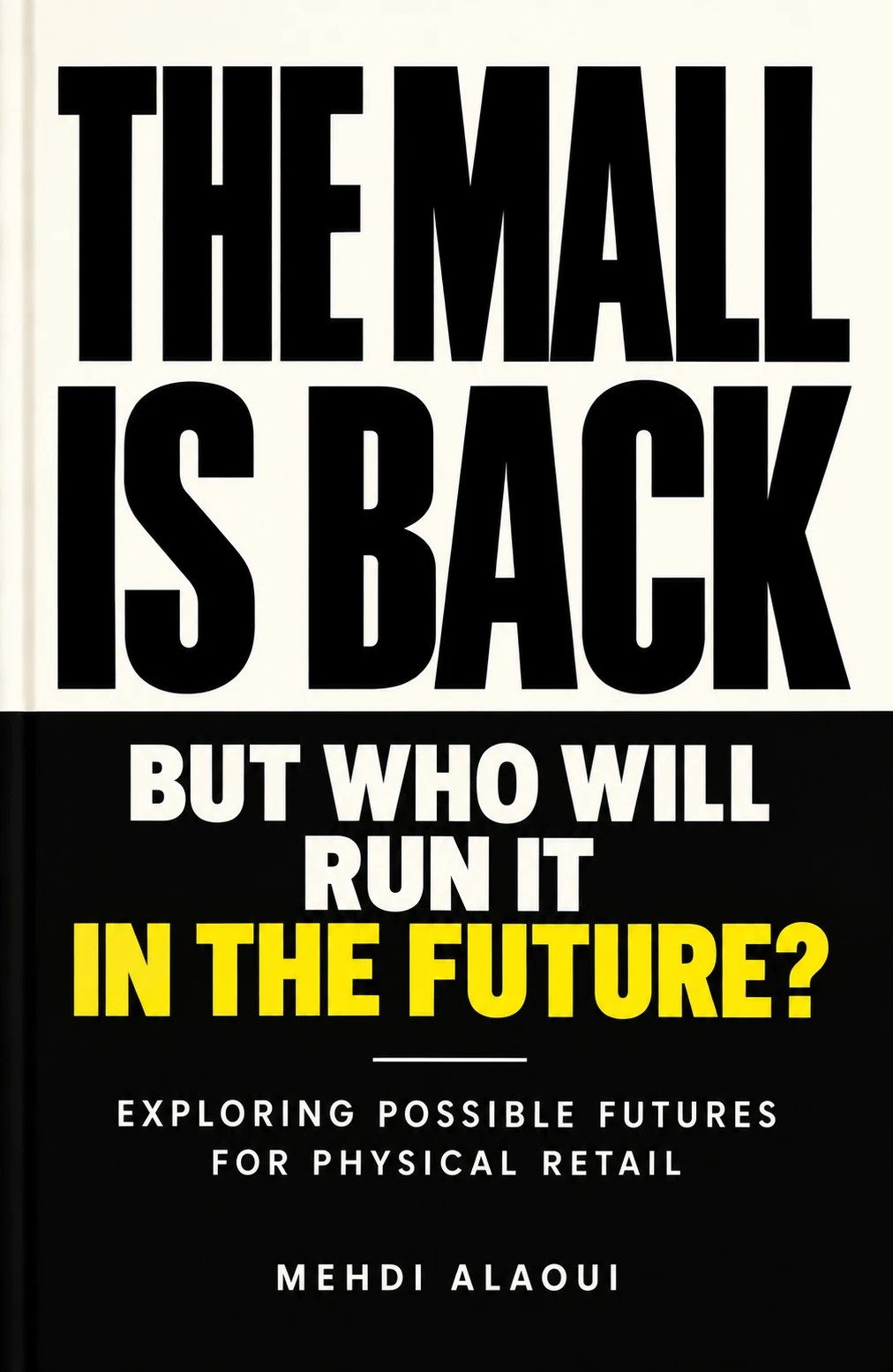
The Mall Is Back
But Who Will Run It in the Future?
Exploring possible futures for physical retail.
For years, the retail industry was told that the future belonged to e-commerce. Shopping malls were declared obsolete, physical stores were closing, and the retail apocalypse became the dominant narrative. Yet physical retail did not disappear. Many leading destinations have proved remarkably resilient, and the industry is entering a new phase.
But the real question is no longer whether physical retail will survive. It is who will shape and control its future.
The boundaries between physical and digital commerce remain surprisingly difficult to cross. Large e-commerce companies have repeatedly ventured into physical retail, with mixed results. Meanwhile, mall operators are exploring new ways to extend their influence beyond their buildings. Brands are caught between powerful digital platforms and fragmented physical retail networks, while omnichannel strategies attempt to connect two worlds that still operate on fundamentally different infrastructures.
Is omnichannel the long-term answer, or merely a transitional arrangement?
Could a company like Amazon, which once appeared to threaten the existence of shopping malls, eventually become one of their most influential operators? Could traditional retail real estate players expand their reach into digital commerce and build a new kind of commercial infrastructure? Or will an entirely different player emerge to connect the two worlds?
The Mall Is Back: But Who Will Run It in the Future? is a forward-looking exploration of these possibilities. It examines the economic forces reshaping commerce, the structural advantages of physical and digital environments, the lessons emerging from previous attempts to bridge them, and the strategic moves that could redefine the industry.
Rather than predicting a single inevitable winner, the book explores the forces already moving behind the scenes, the scenarios they could produce, and the decisions that may determine who captures the next era of commercial value.
For retail property owners, brand leaders, technology executives and investors, the stakes extend far beyond the future of shopping malls. They concern who will own the infrastructure, data, customer relationships and commercial intelligence that make commerce work.
The mall is back. But its next chapter may be written by someone very different from the people who run it today.